
Previous tense of glow: Unveiling the nuances of this evocative verb, from its literal purposes to its wealthy metaphorical potential. This exploration delves into the varied kinds, contexts, and comparisons of the previous tense of “glow,” providing a complete understanding of its versatility and impression.
This in-depth evaluation will cowl every part from the totally different grammatical kinds and refined shades of that means to real-world examples in numerous contexts, highlighting how the previous tense of “glow” can be utilized to color vivid photos and convey profound feelings. We’ll additionally look at the way it compares to associated verbs like “shine,” “burn,” and “radiate,” exploring the refined variations of their connotations and implications.
Previous Tense Varieties and Variations: Previous Tense Of Glow

The previous tense of “glow” is a elementary facet of English grammar, essential for precisely conveying occasions that occurred prior to now. Understanding its varied kinds, nuances, and contexts is important for efficient communication. This exploration delves into the varied methods to precise the previous motion of glowing, highlighting refined distinctions in that means and utilization.The verb “glow” possesses a simple previous tense type, but its utility inside particular sentences can create refined shades of that means.
Analyzing the varied previous tense kinds permits for a deeper understanding of the verb’s contextual deployment, resulting in extra exact and impactful writing.
Potential Previous Tense Varieties
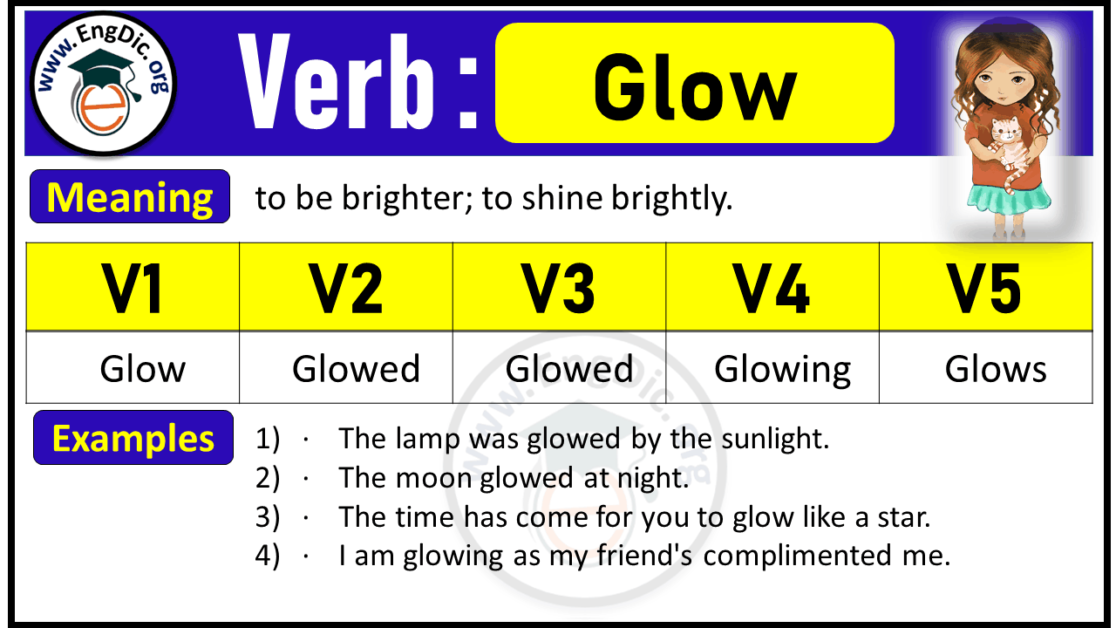
The first previous tense type of “glow” is “glowed.” That is the commonest and simple solution to specific the previous motion of emitting gentle or heat. Different variations exist, every with its personal refined implications.
Nuances in Which means
Whereas “glowed” is the usual previous tense, sentences incorporating phrases like “did glow” or “had glowed” present additional context. “Did glow” emphasizes the motion as a particular prevalence prior to now, typically in response to a query or in distinction to different actions. “Had glowed” signifies the motion occurred earlier than one other previous occasion.
Detailed Desk of Previous Tense Varieties
| Previous Tense Type | Potential Contexts | Instance Sentences |
|---|---|---|
| glowed | Basic previous motion of emitting gentle or heat | The embers glowed brightly within the fire. |
| did glow | Emphasizing the motion as a selected occasion prior to now; typically in response to a query or contrasting with different actions. | Did the solar glow in the present day? Sure, it did glow brightly. |
| had glowed | Indicating the motion occurred earlier than one other previous occasion | The embers had glowed for hours earlier than the fireplace lastly died down. |
Comparability with Associated Verbs
Understanding the nuances of “glow” prior to now tense requires inspecting its relationship to related verbs like “shine,” “burn,” and “radiate.” These verbs, whereas sharing thematic connections, carry distinct connotations and implications, affecting the general message conveyed. Analyzing these variations reveals how “glow” uniquely shapes the narrative.The previous tense of “glow,” like its current tense counterpart, typically evokes a way of heat, radiance, and interior gentle.
This refined distinction in that means can dramatically alter the impression of a sentence or passage. For instance, utilizing “glowed” may counsel a delicate, inside radiance, whereas “shone” may point out a brighter, extra outward show of sunshine.
Analyzing Connotative Variations
The selection between “glowed,” “shone,” “burned,” and “radiated” hinges on the particular context and desired impact. “Glowed” emphasizes a tender, interior gentle, typically related to heat and emotional states. “Shone,” alternatively, implies a brighter, extra exterior gentle, suggesting a extra outward show. “Burned” carries a stronger connotation of depth, doubtlessly suggesting a damaging or fiery high quality.
“Radiated” suggests an emanation of power or energy, doubtlessly encompassing a wider space or impression. The cautious number of these verbs permits writers to exactly convey their supposed that means.
Illustrative Examples
| Verb | Context | Instance | Connotation |
|---|---|---|---|
| Glowed | Describing an individual’s face | Her face glowed with happiness. | Heat, emotional state |
| Shone | Describing a light-weight supply | The solar shone brightly. | Exterior brightness |
| Burned | Describing a fireplace | The hearth burned fiercely. | Depth, destruction |
| Radiated | Describing power | Confidence radiated from him. | Emanation of power, energy |
These examples reveal how the previous tense of every verb paints a definite image. The selection between them considerably impacts the general tone and that means of the textual content. The author’s talent in deciding on the suitable verb highlights their command of language.
Stylistic Implications, Previous tense of glow
The previous tense of “glow” can be utilized in quite a lot of methods to attain totally different stylistic results. For example, it may be used to create a way of nostalgia, to evoke a specific temper, or to emphasise a personality’s emotional state.The refined variations in connotation between “glowed,” “shone,” “burned,” and “radiated” enable writers to create a spread of results.
These verbs are highly effective instruments for conveying complicated feelings and sensory experiences. Using them with precision and intentionality permits writers to raise their storytelling.
Final Level
In conclusion, the previous tense of “glow” is a robust device within the author’s arsenal, able to conveying a variety of meanings and feelings. From the bodily heat of a sundown to the interior gentle of a triumphant spirit, the previous tense of “glow” provides a fascinating array of prospects. This exploration has highlighted the multifaceted nature of this verb, demonstrating its versatility and evocative energy.
Hopefully, this detailed look has offered priceless insights and inspiration on your personal writing endeavors.
FAQ Overview
How does the previous tense of “glow” differ from the previous tense of “shine”?
“Glow” typically implies a softer, hotter, or inside gentle, whereas “shine” suggests a brighter, extra outward radiance. The previous tense of “glow” may emphasize a refined heat, a lingering aftereffect, or an interior radiance, whereas the previous tense of “shine” typically suggests a extra instant and intense brilliance.
Can the previous tense of “glow” be utilized in technical writing?
Whereas primarily related to descriptive and narrative contexts, the previous tense of “glow” can sometimes be employed in technical writing to explain the visible or energetic traits of a course of or phenomenon. For instance, a scientific report may use it to debate the afterglow of a chemical response.
Are there any irregular types of the previous tense of “glow”?
No, “glow” follows the common previous tense sample, forming its previous tense by including “-ed” to the bottom type. Thus, the previous tense is constantly “glowed.”
